
Should I Repair or Replace My Well Pump?
Andy Cobb · Mar 6, 2026
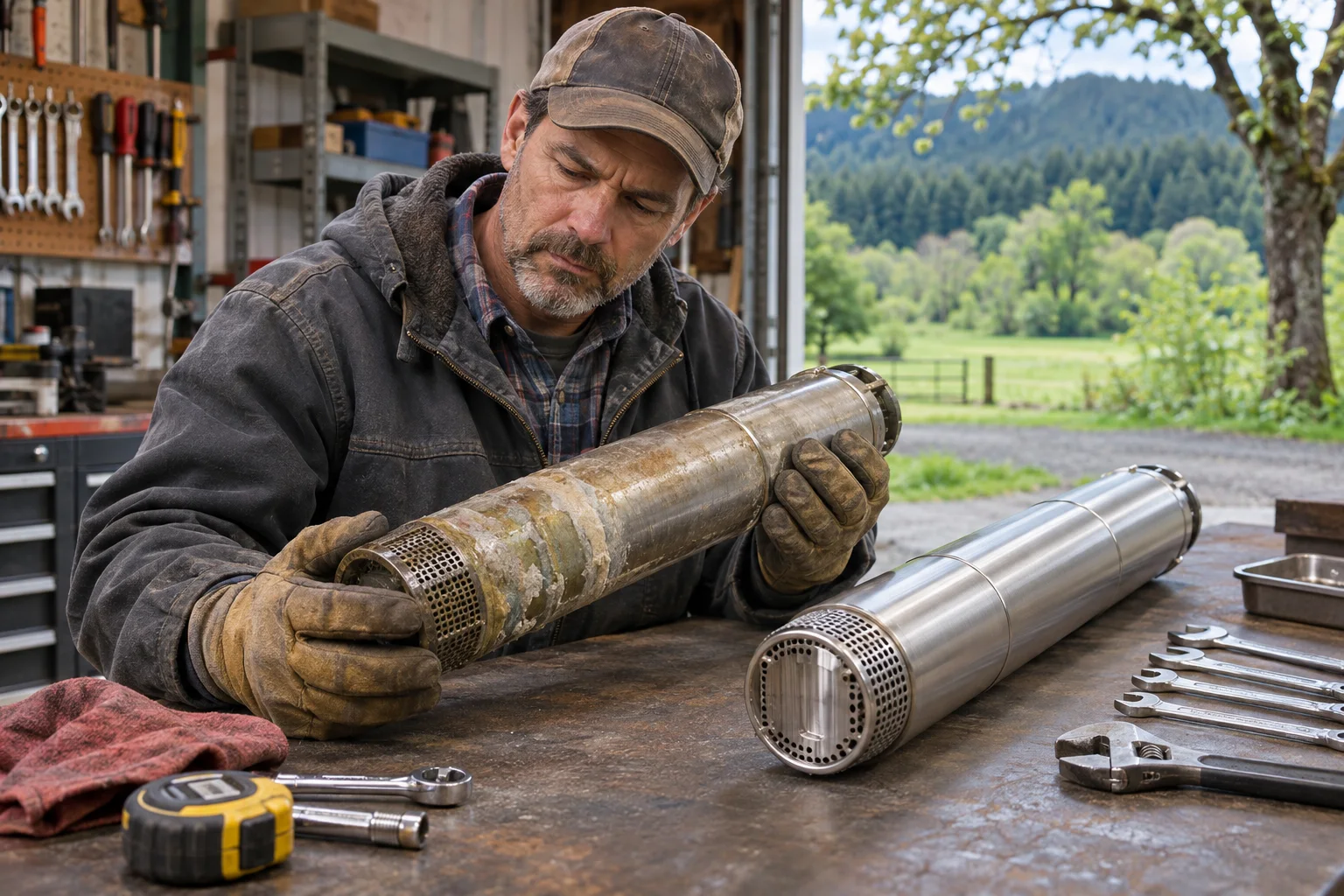
Repair may make sense when a specific, serviceable fault is identified and the pump remains in good condition. Replacement deserves consideration when the pump itself has failed, is badly worn, or no longer suits the system. The first step is diagnosis—not guessing from low pressure or equipment age.
A professional well pump repair and replacement assessment helps distinguish a pump failure from a problem elsewhere in the water system.
Is the pump actually causing the problem?
Weak flow, frequent starts, or a loss of water can have several causes. The pressure tank, controls, electrical supply, filters, supply line, and available well water all deserve consideration. Replacing a working pump will not correct a clogged filter or create more groundwater.
The Oregon State University Well Water Program notes that reduced supply can involve both well or pump problems and groundwater conditions.
When is repair worth considering?
- The fault is outside the pump: a confirmed control or tank issue may be addressed without replacing the pump.
- The problem is isolated: a repairable connection, leak, or component may explain the symptoms.
- The pump still meets demand: testing indicates the existing equipment remains suitable.
- The repair offers reasonable value: the expected result justifies the parts and labor involved.
Ask what the contractor found, what the proposed repair includes, and how performance will be checked afterward. A useful estimate explains the diagnosis as well as the price.
When might replacement be the better choice?
Replacement may be appropriate after confirmed motor failure or substantial pump wear. It may also be reasonable if the equipment is unsuitable for the required flow and head, or if repeated repairs make continued use difficult to justify.
Age provides context, but it is not a pass-or-fail test. Operating conditions, maintenance history, sediment exposure, and cycling behavior can differ from one installation to another. There is no single replacement birthday that applies to every well pump.
How should I compare the estimates?
Ask for the full scope: diagnosis, pump removal if necessary, equipment, installation, related components, and commissioning. For a submersible installation, accessing the pump can be a significant part of the work. Compare warranty terms and the expected outcome, not only the component price.
Before approving replacement, ask whether an underlying problem also needs correction. A new pump may face the same trouble if inadequate water supply, abnormal cycling, or another system fault remains unresolved.
What should I do while waiting for service?
Record when symptoms occur and whether they affect every fixture. Have the pump model and service history ready. Avoid opening electrical controls or repeatedly resetting a tripping breaker. If the pump runs without delivering water, stop demand and contact a professional promptly.
Oregon's well and drought guidance explains why reduced production needs assessment and why low-water pump protection matters.
Get a diagnosis before replacing your pump
Coastal Range Water provides well pump troubleshooting, repair, and installation in Lane County. Call 541-935-7867 to discuss your symptoms and request an evaluation.