
How Does a Private Well Water System Work?
Andy Cobb · Feb 14, 2026
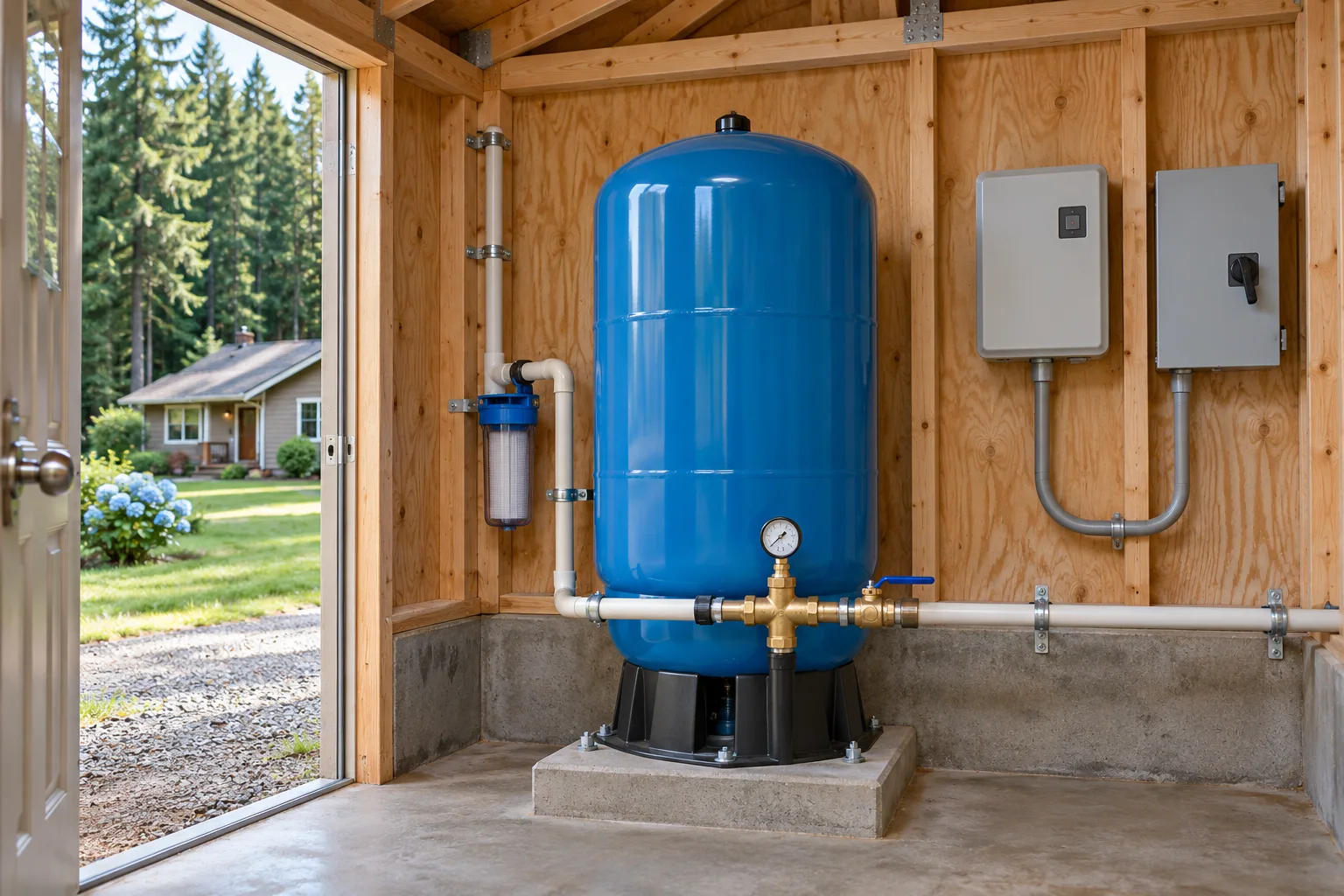
A private well water system uses a pump to move groundwater into your home's plumbing, with controls and a pressure tank managing delivery. The well supplies the water; the pump moves it; the pressure system helps make it available when you turn on a faucet. Understanding those separate jobs makes conversations about low pressure or no water much easier.
For Lane County homeowners, knowing the basics of a complete well water pump system can help you describe symptoms and understand a contractor's recommendations.
What are the main parts of a private well system?
The well and its protective components
The well provides access to groundwater. Its casing, cap, and seals help protect that access point. Groundwater conditions and well construction influence the available supply; a pump cannot create water the well does not have.
The well pump
A submersible pump operates below the water level and pushes water upward. Some systems use an above-ground jet pump instead. The appropriate arrangement depends on the well and the installation. A buried supply line carries water toward the house.
The pressure tank and controls
In a conventional system, the pressure tank holds a limited amount of usable water under pressure. A pressure switch starts and stops the pump as pressure changes. A check valve helps prevent reverse flow. Variable-speed systems use different controls, so your equipment may not operate exactly like your neighbor's.
What happens when I turn on a faucet?
In a typical pressure-switch system, water initially leaves the pressure tank and flows toward the open fixture. As pressure drops to the start setting, the pump runs. After demand stops and pressure reaches the stop setting, the pump shuts off. The Water Systems Council explains this operating cycle in its well-owner guidance.
The tank helps avoid restarting the pump for every small water use. It is not the same as a large storage cistern intended to help meet peak demand.
Where do filters and water treatment fit?
Treatment equipment is selected around water-test results and system requirements. A sediment filter, softener, and disinfection unit perform different jobs. Their placement and flow requirements must fit the overall design. Clear water and strong pressure alone do not establish drinking-water quality.
Why can water flow change?
- A restriction: a clogged filter or plumbing problem can limit delivery.
- An equipment fault: tank, control, or pump problems can change system behavior.
- A supply limitation: demand may exceed the well's available production.
Describe whether the problem affects one fixture or the whole house, whether it follows heavy use, and whether the pump behaves differently. These observations help guide diagnosis; they do not identify the failed part on their own.
When should I call for service?
Arrange an inspection for persistent pressure changes, unusually frequent cycling, visible leaks, or a pump that runs without delivering water. Leave electrical adjustments and well access to a qualified professional.
Coastal Range Water provides well pump installation, repair, and maintenance for Lane County properties. Call 541-935-7867 to discuss your system and arrange service.
Further reading: Oregon Water Well Owner's Handbook.